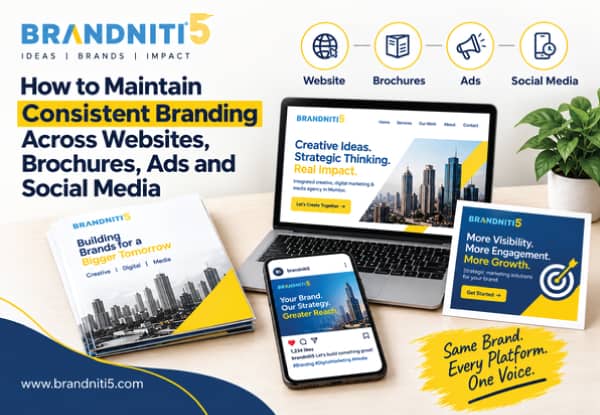
How to Maintain Consistent Branding Across Websites, Brochures, Ads and Social Media
Customers may
discover your business through a social media post, visit your website later,
and come across your brochure when considering your services. Each interaction
shapes their impression of your brand. If the design, messaging, and tone feel
different across these platforms, people may find it difficult to recognise
your business.
Maintaining
consistent branding helps your business create a familiar and professional
image. Whether you are designing a website, preparing a brochure, or launching
an advertising campaign, every platform should reflect the same brand identity.
What
Does Consistent Branding Mean?
Consistent
branding means presenting your business with a recognisable visual style and
communication approach across different platforms. This includes your logo,
colours, fonts, images, messaging, and tone of voice.
For example,
if your website follows a clean, modern design, your
brochures and advertisements should use a similar visual style. Each platform
can have a different layout while maintaining the same brand personality.
A Consistent
Brand Identity helps customers recognise your business and understand what
it stands for.
5
Brand Consistency Strategies for Different Channels
1. Create Clear Brand Guidelines
Start by
defining how your brand should look and communicate. Your guidelines should
cover logo placement, approved colours, typography, image styles, and writing
tone.
These
guidelines give designers, writers, and marketing teams a common reference when
creating content. Strong Brand Identity Design is not just about having an
attractive logo; it also ensures that your visual elements work together across
different materials.
2. Connect Your Website and Brochures
Your website
and brochures may serve different purposes, but they should feel like parts of
the same brand. A website can explain your services in detail, while a brochure
presents key information in a compact format.
Use similar
colours, fonts, photography, and design elements across both. This creates a
familiar experience when customers move from one platform to another.
3. Keep Ads and Social Media Recognisable
Advertisements
need to attract attention quickly, while social media helps businesses share updates, campaigns,
and useful information.
Use approved
brand colours, logos, templates, and visual styles to connect your content.
Your posts do not need to look identical, but people should still be able to
recognise your business.
These Brand
Consistency Strategies help maintain a connected appearance across paid
campaigns and everyday social media content.
4. Maintain a Consistent Brand Voice
Branding is
not only about visuals. The way you communicate also influences how customers
perceive your business.
Decide
whether your brand should sound friendly, professional, informative, or
creative. Apply that tone to website copy, brochures, advertisements, and social media captions.
The wording
can change to suit each platform, but the overall personality should remain
familiar. This makes your communication feel more natural and connected.
5. Coordinate Your Marketing Messages
Your website,
brochures, advertisements, and social media should communicate accurate and
consistent information. Check service descriptions, offers, contact details,
and calls to action before publishing.
This is where
Integrated Brand Communication becomes important. It helps coordinate messages
across different channels so customers receive a clear and connected view of
your business.
For example,
if you update a service or launch a new offer, make sure the change is reflected
in all relevant marketing materials.
Common
Branding Mistakes to Avoid
Small
inconsistencies can make your brand appear less organised. Avoid using outdated
logos, changing colours without a clear reason, mixing unrelated fonts, and
sharing old promotional offers.
Another
common mistake is creating content without referring to brand guidelines. Keep
approved design files, templates, and images in one accessible location so your
team can use the correct versions.
Review your
marketing materials regularly to identify outdated information and visual
differences.
Conclusion
Consistent
branding helps your business present a clear identity wherever customers
discover it. From your website and brochures to advertisements and social
media, every channel should support the same brand personality and message.
Start with
simple brand guidelines, use approved design elements, and review your content
before publishing. With regular attention and coordinated communication, your
business can create a more recognisable and professional presence.
At Brandniti5, creative, branding, and marketing solutions can help businesses
build a connected identity across digital and traditional channels.
Frequently Asked Questions
It helps customers recognise your business, understand what it represents, and experience a familiar identity across different platforms.
The main elements include your logo, colours, fonts, images, messaging, and tone of voice.
Use clear brand guidelines, approved design assets, consistent messaging, and regular reviews of websites, brochures, advertisements, and social media content.
It means coordinating messages across different marketing channels to provide customers with a clear and connected brand experience.
Review your branding regularly and whenever your business, services, or marketing strategy changes. Update outdated materials to keep your communication consistent.
 +91 90823 59193
 marketing@brandniti.com
 R City Mall Offices, LBS Marg, Ghatkopar West, Mumbai, Maharashtra 400086