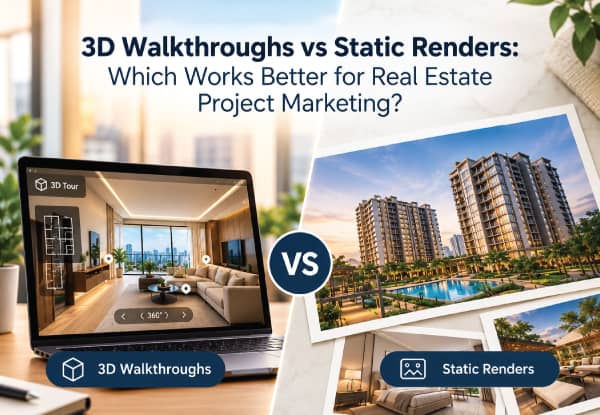
3D Walkthroughs vs Static Renders: Which Works Better for Real Estate Project Marketing?
Promoting a
property before it is built can be challenging. Buyers want to know what their
future home or investment may look like, but they cannot walk through a
finished building or inspect its actual interiors. Developers therefore need
ways to present their plans in a clear and appealing manner.
Two useful
options are static 3D images and animated property walkthroughs. Both help
people understand a proposed project, but they communicate its features
differently. Let's look at how each option works and when developers should use
it.
Understanding
Static Renders in Real Estate
Imagine
seeing a digital picture of an apartment with its planned furniture, lighting,
flooring, and colour scheme. That is the basic idea behind a static render.
Real Estate
Rendering creates digital images of a proposed property using its design
details. These images can show apartment interiors, building exteriors,
entrance areas, gardens, and shared facilities.
Why do developers use static renders?
● Highlight key features: Focus attention on a particular room,
building facade, or amenity.
● Support advertising: Use images in brochures, property portals, websites, and social media campaigns.
● Simplify project presentations: Help buyers understand the proposed design
without interpreting technical drawings.
● Create reusable content: Adapt selected images for different
promotional materials.
For example,
a developer launching a residential project could use a living-room render to
highlight the planned interior design and an exterior image to introduce the
building's appearance.
How
Do 3D Walkthroughs Work?
A 3D walkthrough presents a proposed property through an
animated journey. Instead of viewing individual pictures, people can follow a
route through selected rooms, corridors, outdoor spaces, and amenities.
Professional
3D Walkthrough Services can help developers explain how different areas connect
and give prospective buyers a better understanding of the property's planned
layout.
What makes walkthroughs useful?
● Show the bigger picture: Help viewers understand how rooms and common
areas relate to one another.
● Present the property as a journey: Move from one area to another instead of
relying on separate images.
● Support video campaigns: Create material for project launches,
websites, and sales presentations.
● Explain the proposed experience: Show how the design and facilities may come
together.
For instance,
a walkthrough could follow a visitor from the building entrance into an
apartment, through the living and dining areas, and towards the bedrooms and
balcony.
Static
Renders vs 3D Walkthroughs: The Main Differences
Both formats
can be valuable, but their uses vary depending on the marketing requirement.
|
Factor |
Static Renders |
3D Walkthroughs |
|
Presentation |
Individual digital images |
Animated visual tour |
|
Best use |
Highlighting selected features |
Explaining the overall layout |
|
Common platforms |
Brochures, listings, social media |
Websites, video ads, presentations |
|
Production |
Usually less complex |
Requires animation and scene planning |
|
Budget |
Often more affordable |
Often involves higher production costs |
The choice
should depend on the project's requirements, available budget, and the
information buyers need to see. Production quality also matters: a well-planned
image or video is more useful than a visually impressive presentation that
fails to explain the property clearly.
The
Role of 3D Architectural Visualization in Property Promotion
3D
Architectural Visualization turns design plans into digital presentations that
are easier for buyers to understand. It can help developers introduce projects
during the planning or construction stage, when finished spaces are not yet
available for photography.
These visuals
can support several marketing activities:
● Presenting the proposed design before launch.
● Explaining apartment layouts and planned
facilities.
● Creating content for property websites and
digital advertisements.
● Helping sales teams communicate project
details.
● Maintaining a consistent visual style across
marketing channels.
Developers
should ensure that the visuals accurately represent the approved plans and
clearly communicate which features are proposed. This helps potential buyers
develop realistic expectations.
Which
Option Should You Choose for Your Project?
There is no
single format that works best for every development. The decision depends on
what you want your audience to understand.
Static
renders are a practical choice when you need images for print advertising, property listings, brochures, or regular
social media posts. They are particularly useful for highlighting specific
design details.
3D
walkthroughs are worth considering when the layout needs more explanation or
when you want to present several spaces in one continuous video. They can be
helpful during project launches and detailed sales presentations.
For many
developments, combining the two is a sensible approach. Use still images to
introduce the project and draw attention to important features, then use a
walkthrough to give interested buyers a broader view.
Conclusion
Choosing the
right visual format starts with understanding your marketing objective. Static
renders help communicate individual design features, while walkthroughs give viewers
a guided look at the proposed property. When planned carefully, both can
support a more informative real estate marketing campaign.
Brandniti5 can help businesses bring their project
communication together through creative content and marketing solutions
designed for different platforms and audiences.
Frequently Asked Questions
Static renders show a property through individual digital images. Walkthroughs use animation to guide viewers through selected spaces and explain how the layout connects.
Yes. They can show the proposed interiors, exterior design, and amenities before construction is complete, provided the images reflect the project's planned specifications.
Developers use walkthroughs to present property layouts, demonstrate how spaces connect, and create visual presentations for project launches and prospective buyers.
It can be used in brochures, property listings, websites, social media posts, digital advertisements, sales presentations, and outdoor promotional materials.
Yes. Static images can highlight specific features, while walkthroughs provide a more connected view of the property. Using both allows developers to address different marketing needs.
 +91 90823 59193
 marketing@brandniti.com
 R City Mall Offices, LBS Marg, Ghatkopar West, Mumbai, Maharashtra 400086